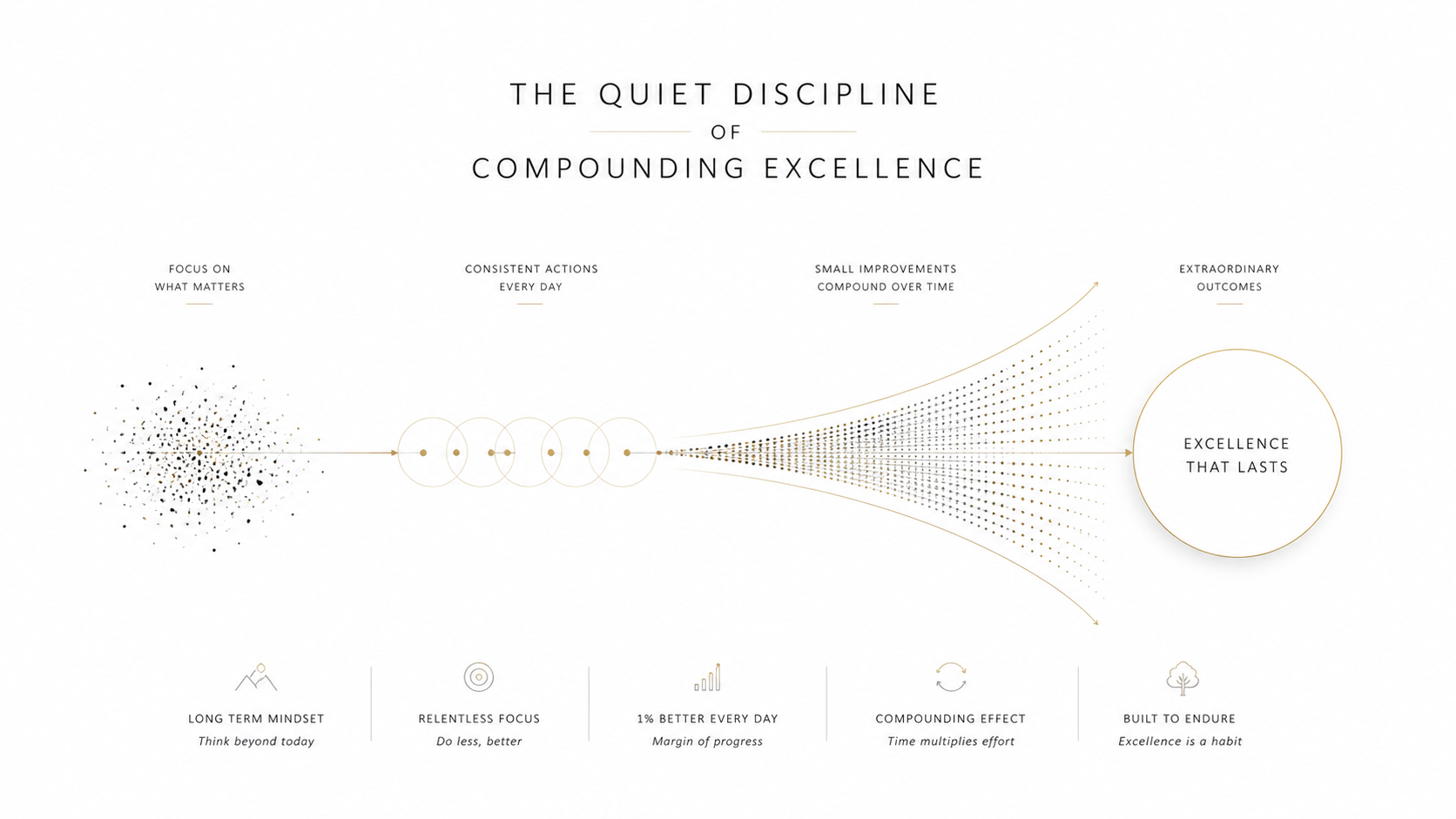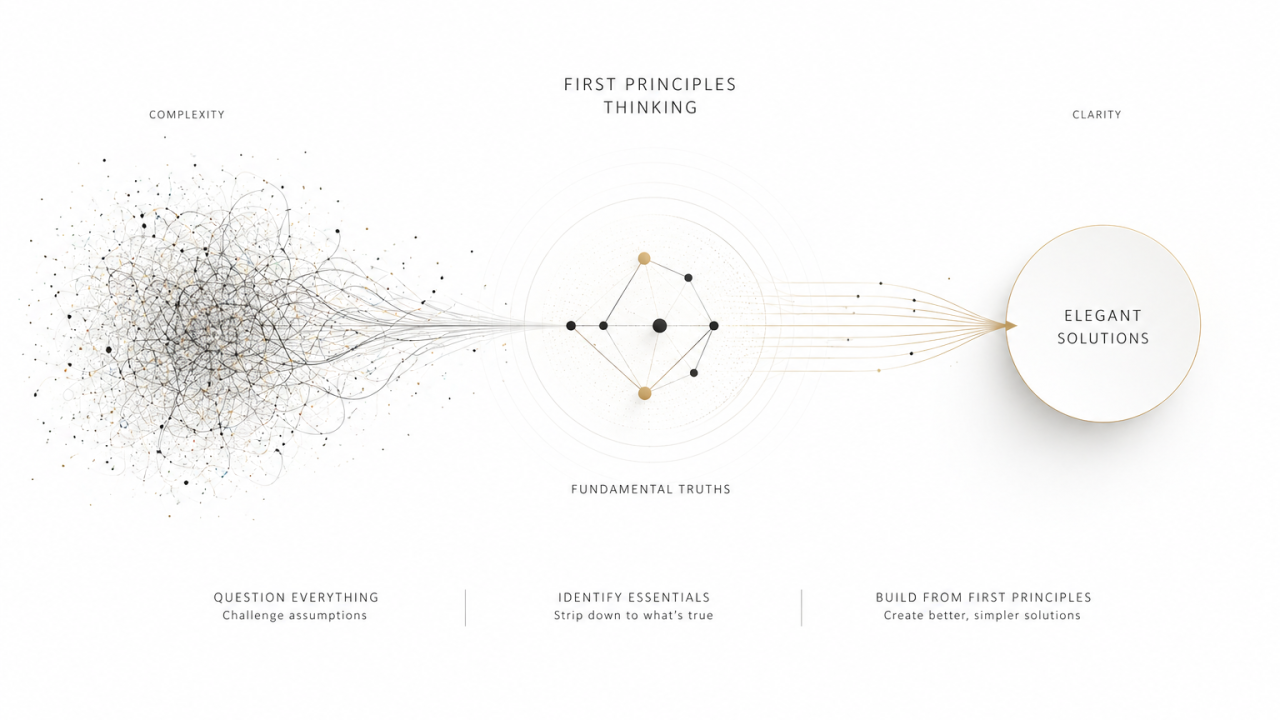
Excellence is built, not transformed.
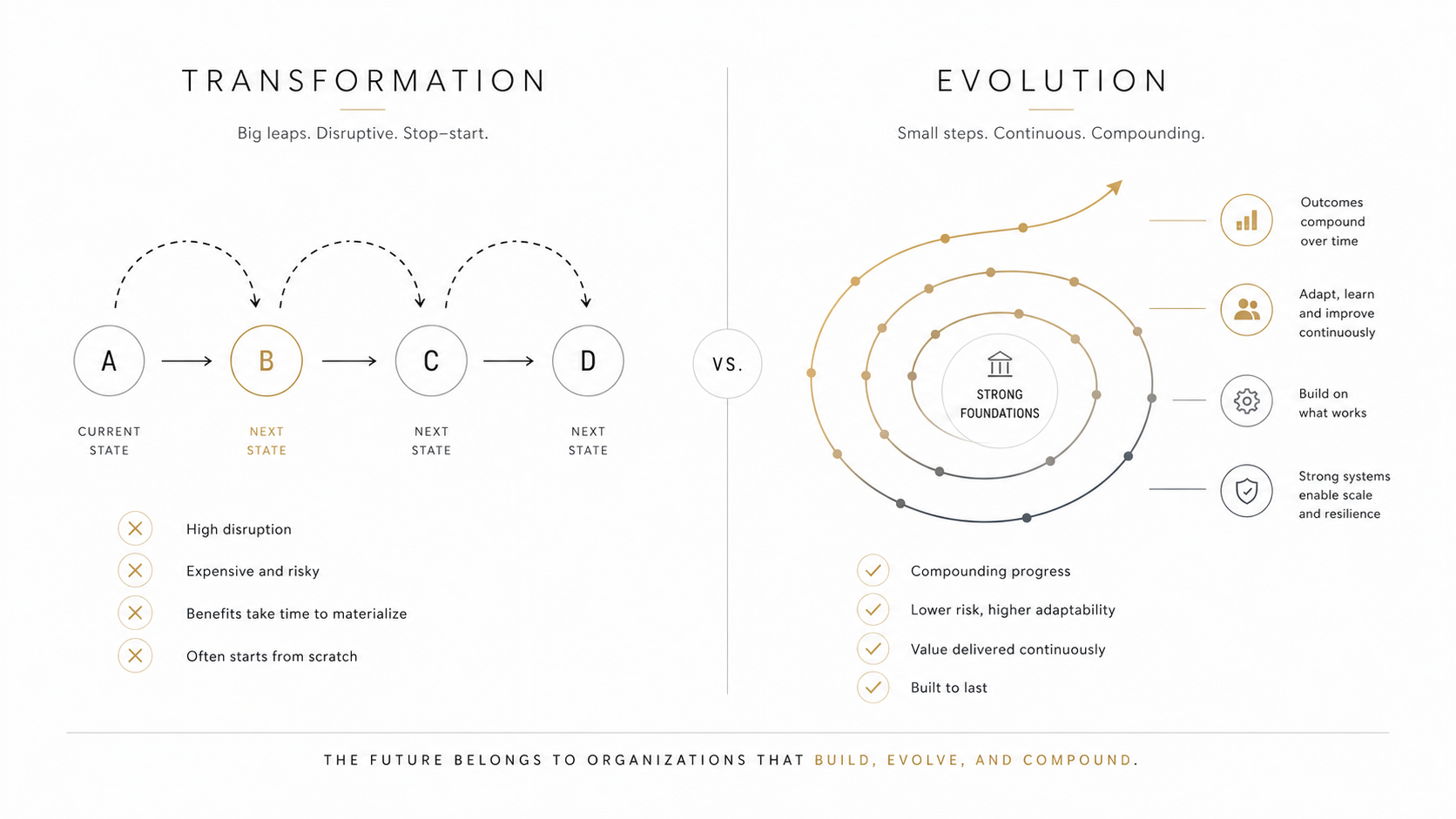
Over the past few years, I’ve noticed how frequently the word “transformation” is used across our industry. AI transformation, digital transformation, business transformation. Entire roles, teams, and strategies are built around the concept. And while I understand why, I’ve always found myself looking at it slightly differently.
From a technology and engineering perspective, progress has rarely been about episodic change. It is not a linear journey from A to B that is declared “done” before moving on to the next phase. The most effective organisations treat progress as a continuous discipline. They invest in strong, enduring foundations and then evolve them deliberately over time. In practice, that means getting the fundamentals right and keeping them right: clean and connected product data, a unified understanding of the consumer, reliable transactional systems, and real time visibility across operations. These are not transformation milestones. They are the baseline for how modern organisations should operate.
There is also a common belief that progress needs to be catalysed from the outside, often through large scale programmes led by external parties. External perspectives can absolutely be valuable. They can challenge assumptions and bring pattern recognition. But the hard truth is that the most important problems cannot be outsourced. Deep understanding of your business, your systems, and your future direction has to come from within.
If you look at companies that consistently push boundaries, they tend to stay very close to the core problems they are solving. Elon Musk did not build SpaceX or Tesla by running periodic transformation programmes led from the outside. Similarly, Jensen Huang and NVIDIA spent years building foundational capabilities that positioned them ahead of the AI curve, while Jeff Bezos embedded mechanisms at Amazon that allowed entirely new businesses like Amazon Web Services (AWS) to emerge organically from within. Different industries will require different approaches, but the underlying principle holds: enduring advantage is built, not outsourced.
What becomes interesting is what happens next. When those foundations are in place, you do not need to “pivot” every few years. You are already positioned to extend. Whether it is more intelligent user experiences, deeper integration through APIs, or emerging agent driven workflows powered by AI, these are natural progressions rather than disruptive resets. You are not retrofitting the future into your business. You are building in a way that allows the future to emerge from what already exists.
This is ultimately a mindset. It requires thinking three to five years ahead while executing with precision today. It asks leaders to prioritise long term capability over short term optics. And it rewards organisations that treat technology not as a series of projects, but as a living system that continuously adapts and improves. In my experience, the organisations that embrace this way of thinking are the ones that create disproportionate advantage over time.
You don’t need transformation. You need systems that evolve, and people who care enough to build them properly.
“Nothing will work unless you do.” — John Wooden