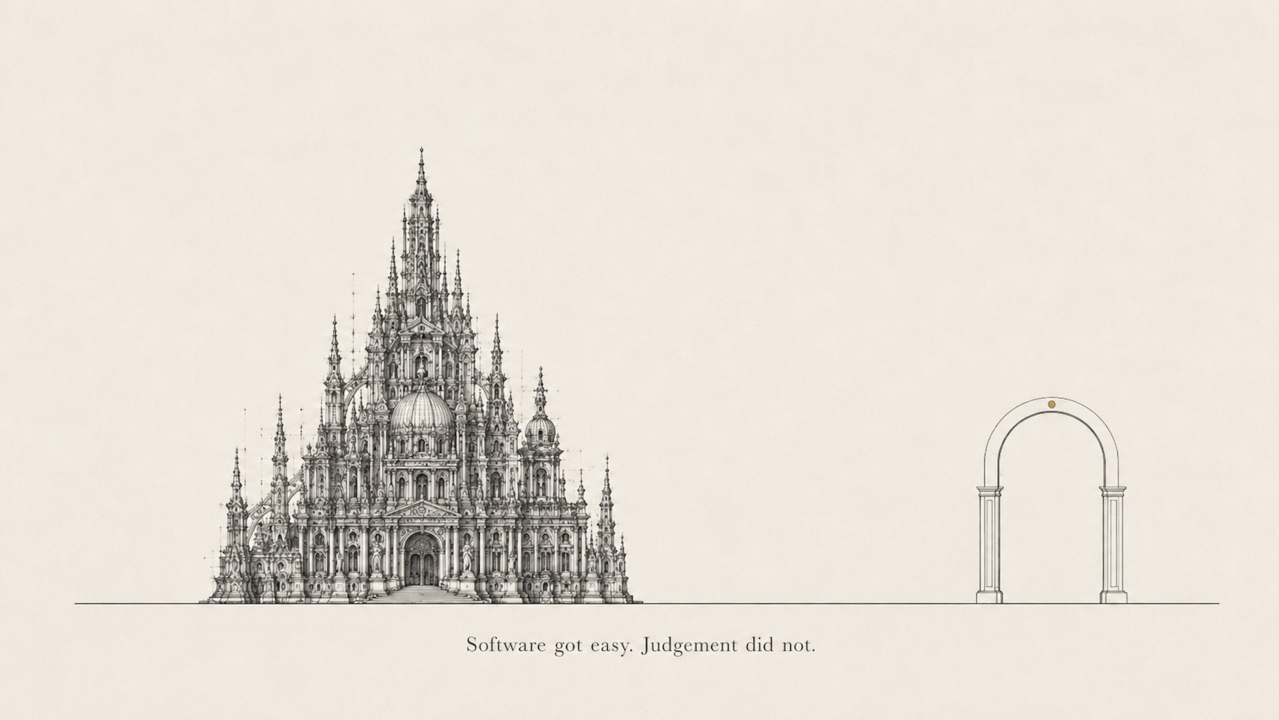
AI Raises the Price of Judgement
For years, companies outside tech were taught to be slightly afraid of software.
Buy the platform. Hire the consultancy. Run the transformation. Integrate the SaaS stack.
The problem was not only cost.
It was dependency.
When companies lack internal technology judgement, they become too easy to sell to. Every problem becomes another platform, another integration, another roadmap, another multi year programme.
This fuelled an entire generation of growth for software vendors. Huge custom systems bought on the promise of transformation. Years spent in configuration. Timelines that slipped quietly into the next strategic cycle. Transformations that never quite arrived, but always justified the next phase.
It was (still is) a comfortable arrangement for everyone except the company paying for it.
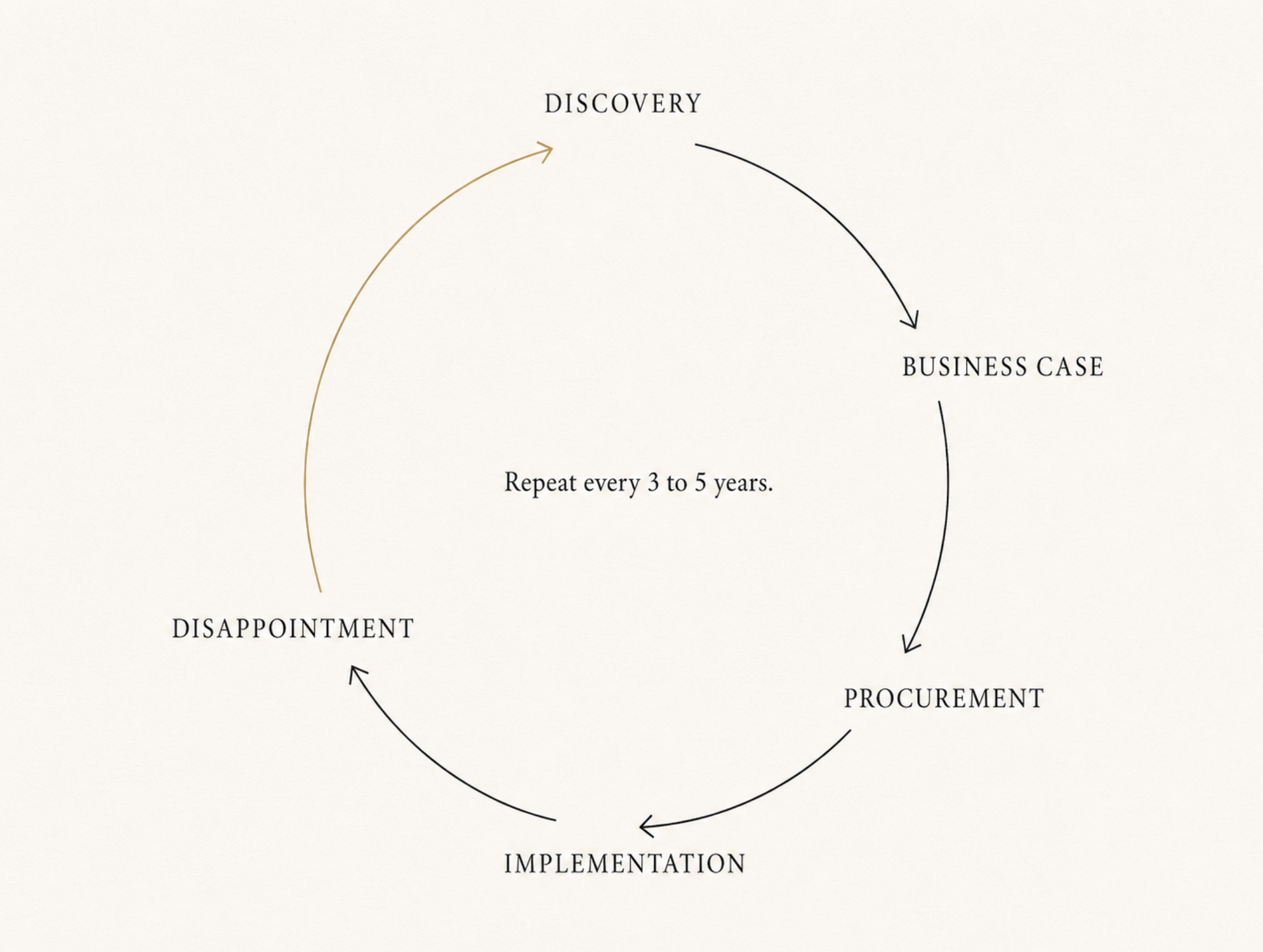
The companies most exposed to this are the ones outside the technology industry. Where the leadership did not grow up speaking software. Where the CTO is the only voice in the room making the technical judgement. Where the business has been taught that software is something you buy, not something you understand.
Tech native companies have always known how to push back on vendors. They have the depth, the instincts, the muscle memory of having built things themselves. Most other industries do not. And the asymmetry has cost them dearly.
AI is shifting the balance.
Not because every company will suddenly build everything itself. But because more people can now explore what software could be.
They can prototype. They can vibe code. They can test workflows. They can see the shape of the thing before committing to the programme.
There is a quiet lightbulb moment happening across boardrooms and operating teams. The execution of software << the act of producing something that works>> is becoming the easy part.
Maintenance is still hard. Architecture is still hard. Running things reliably at scale is still hard.
But so is a five year transformation.
The question is no longer only: “Which system should we buy?”
It becomes: “What do we actually want software to do?”
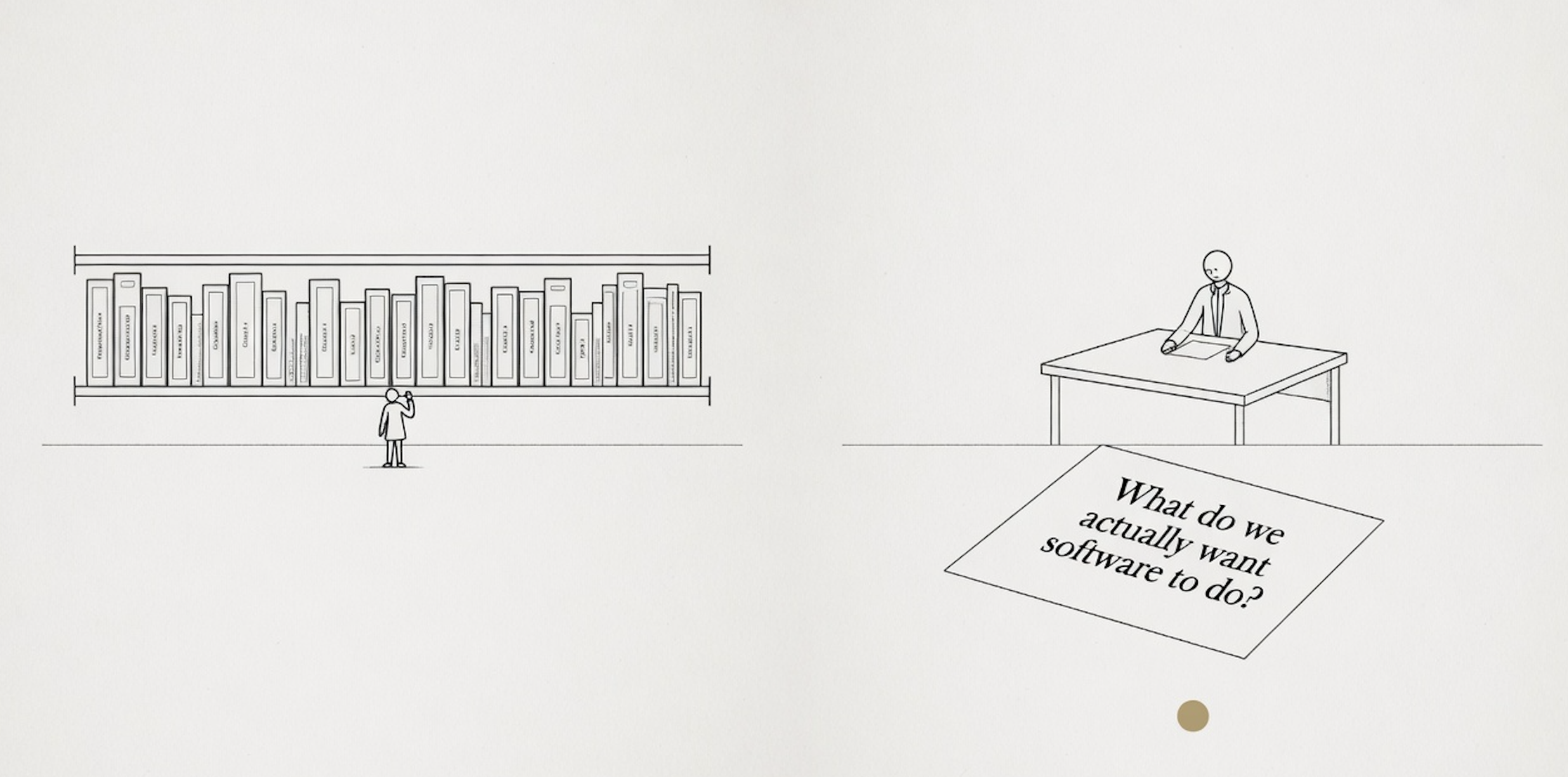
That is a harder question. It requires judgement about what to automate, what to keep human, what to buy, what to build, what data matters, and where the company must own the intelligence rather than rent it.
The same principle that has always defined cool brands now defines premium technology organisations. A brand is not built by buying more advertising. A technology organisation is not built by buying more software.
Both are built by taste.
By knowing what to include and what to leave out. By knowing what good looks like and holding the line when the cost of mediocrity has fallen to zero.
The companies that figure this out first will be the ones that learn to make technology judgement an organisational capability, not a single hire.
AI does not remove the need for technology judgement. It raises the premium on it.
When making software gets easier, knowing what is worth making becomes the real advantage.
More on that soon.